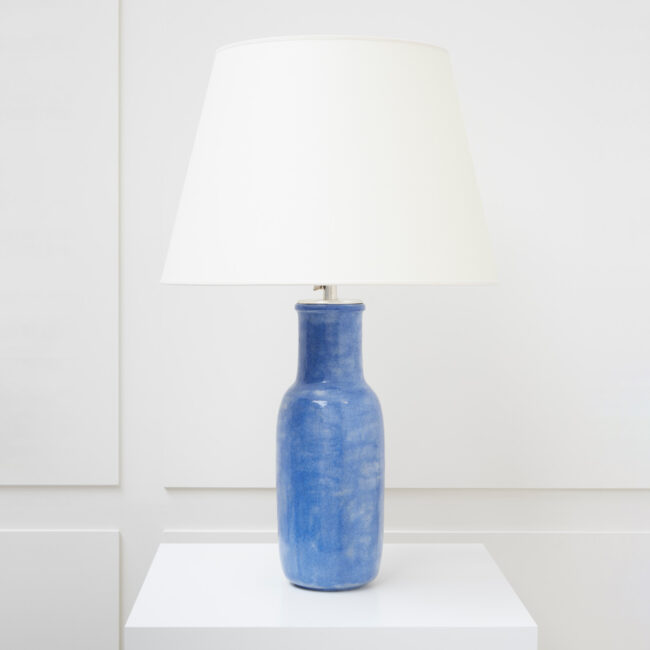
ANDRÉ GROULT (1884-1966)
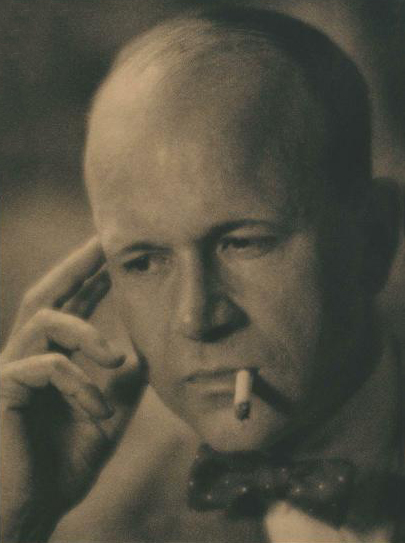
André Groult is regarded as one of the leading figures in French interior design of the interwar period. Inspired by his love of period styles, he developed a distinctive aesthetic and demonstrated a masterful use of precious materials, particularly shagreen. His work, ranging from furniture to carpets and interior design, embodies the elegance and avant-garde spirit of Art Deco.
View full biography
Born in 1884 into a family with no connection to the world of decorative arts, André Groult initially pursued scientific studies before joining the newspaper founded by his father. His marriage to Pauline Marie Poiret, sister of the fashion designer Paul Poiret and herself an aspiring fashion designer, introduced him to a family circle characterised by a strong artistic sensibility.
He soon gave up journalism to devote himself to interior design, when the young couple moved into their Parisian flat. One thing led to another, and the couple built up a stock of goods (antique furniture, African masks, earthenware) which led them, in the summer of 1908, to establish their antiques and interior design business at 31 Rue d’Anjou, in a private mansion. This address enabled them to meet Louis Süe, who became a close friend and collaborator, tasked with fitting out the premises. As their clientele grew, the need to restore the antique furniture they had acquired naturally led Groult towards furniture design, whilst his wife, from 1910 onwards, began showcasing her own fashion designs there.
Groult quickly made a name for himself through his rejection of Art Nouveau and his commitment to the styles of the past, which he combined with a refined use of precious materials. By 1913, he had mastered the entire production process, opening his own workshops for joinery, cabinet-making, tapestry and upholstery, and became a ‘fashionable artist’ sought after by a wealthy clientele; from 1924 onwards, he produced his own works. At the same time, he worked towards the revival of the modern carpet and became a publisher of furnishing fabrics and wallpapers, notably promoting the designs of George Barbier alongside other renowned illustrators such as Roland Goujon, Jean-Émile Laboureur and Marie Laurencin.
Convinced that decorative art could only be viable by perpetuating traditional styles, having himself been an antiquarian, he nonetheless pursued innovative research throughout his life, collaborating with the most renowned craftsmen and manufacturers (Isidore Leroy, Desfossé & Karth, Alfred Hans), painters (Jean-Émile Laboureur, Marie Laurencin) and men of letters, including Apollinaire. He thus became part of the neo-classical movement which, in the 1910s, sought to reconcile ancient tradition with modern taste through resolutely contemporary solutions, whilst aspiring to make them accessible to as many people as possible through mass production.
For the 1925 International Exhibition of Decorative Arts, he designed the famous ‘Madame’s bedroom’, characterised by a spectacular use of shagreen, as evidenced today by a chiffonier held at the Musée des Arts Décoratifs. This success cemented his reputation and earned him prestigious commissions, including the interior design of the ocean liner Normandie.
A year before his death, in 1965, he resolved to sell his last pieces of furniture at the Hôtel Drouot, to the market’s relative indifference. This lack of interest has since been largely reversed: André Groult is now recognised as one of the most brilliant interior designers of the Art Deco period.
Works