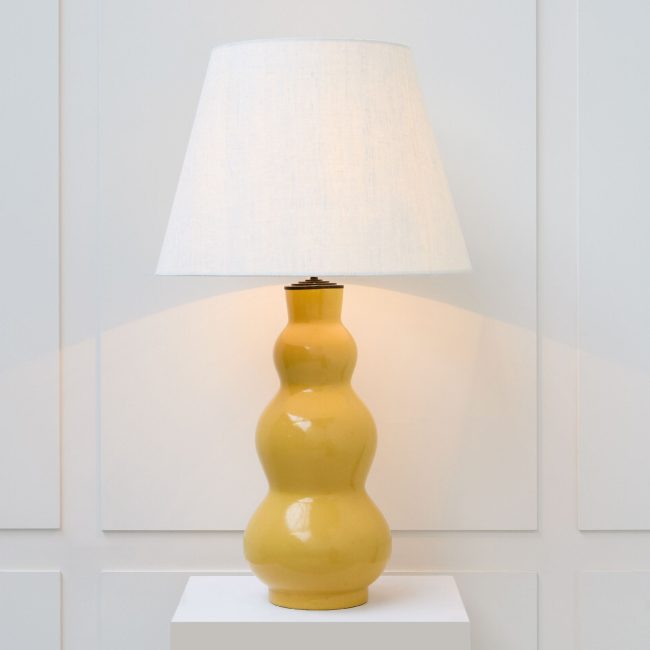
Atelier Martine (1911-1929)
The Atelier Martine, founded in April 1911 by fashion designer Paul Poiret, was a revolutionary initiative in the world of decorative arts, marked by originality of form, creative freedom and the spontaneity of the young talents it welcomed. Named after his daughter Martine, this workshop became an iconic place where creative young people could find their place. Located at 107 Rue du Faubourg Saint-Honoré in Paris, it stood out from the outset for its innovative approach and liberal atmosphere.
View full biography
This workshop stood out thanks to Poiret’s bold vision, inspired by his travels in Austria and Germany, particularly by the influence of the Wiener Werkstätte and the architecture of Josef Hoffmann. More than just a place of learning, it became a veritable creative laboratory, where young girls, often aged around twelve, were encouraged to draw freely from nature in a wild and natural setting, such as the Jardin des Plantes or the countryside. Freed from all academic constraints, they produced works imbued with freshness and spontaneity, often characterised by vivid floral motifs and compositions inspired by popular imagery, the Orient and primitive arts.
The works created by these young artists were not simply drawings: they came to life in the form of printed fabrics, carpets, wallpapers and ceramics. These creations were then manufactured and sold in Poiret’s boutique, which opened at 83 Rue du Faubourg Saint-Honoré in the autumn of 1911. The boutique became a veritable hub for the Martine aesthetic, where decorative objects as well as bottles and sprayers for Rosine perfumes attracted a sophisticated clientele eager for novelty.
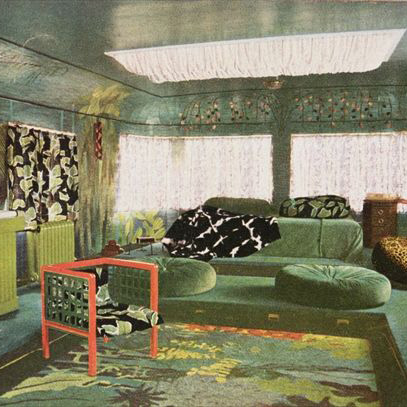
Beyond textile creations, Atelier Martine stands out for its distinctive furniture, featuring a cubist style and bright colours, often made from painted wood or rare materials. This furniture harmoniously complements the decorations created by the young women in the workshop. This original furniture can be found in prestigious locations, including Paul Poiret’s barges, which were furnished with the workshop’s creations for the Universal Exhibition.
Paul Poiret, aware of his students’ potential, not only encouraged them to paint, but also taught them other decorative arts such as porcelain painting, pottery, stained glass and glassware. This wide range of techniques allowed the young women to diversify their talents and deepen their understanding of decoration. Their work was recognised and appreciated by prominent figures of the time, such as the artist Kees Van Dongen and Baron de Précourt, to name but a few of the many clients who sought out their creations. In 1915, the workshop even decorated the mansion of the actress Spinelly, located on the Champ-de-Mars, a project that included the collaboration of Paul Iribe for the furniture and Fauconnet for the decorative elements.
The style of Atelier Martine was a perfect fusion of modern art and a taste for exuberant colours and shapes. It quickly became a symbol of the decorative revival of the early 20th century and attracted the attention of the artistic avant-garde in particular.
Works