ALBERTO GIACOMETTI (1901-1966)
The eldest of four children, Alberto Giacometti was born in 1901 in Switzerland, in a village near the Italian border. From a very young age, he was introduced to painting by his father, then began his studies at the Geneva School of Fine Arts before moving to Paris in 1922. He chose to focus on sculpture, which he learnt under Antoine Bourdelle at the Académie de la Grande Chaumière.

View full biography
The young sculptor began exhibiting his work from time to time at art fairs from 1925 onwards. Still relatively unknown, he lived and worked in a small studio tucked away in the 14th arrondissement, where his younger brother Diego joined him in 1930. The two brothers, now reunited, worked together, with the elder conceiving the designs and the younger, acting as his protector, serving as ‘his other pair of hands’.
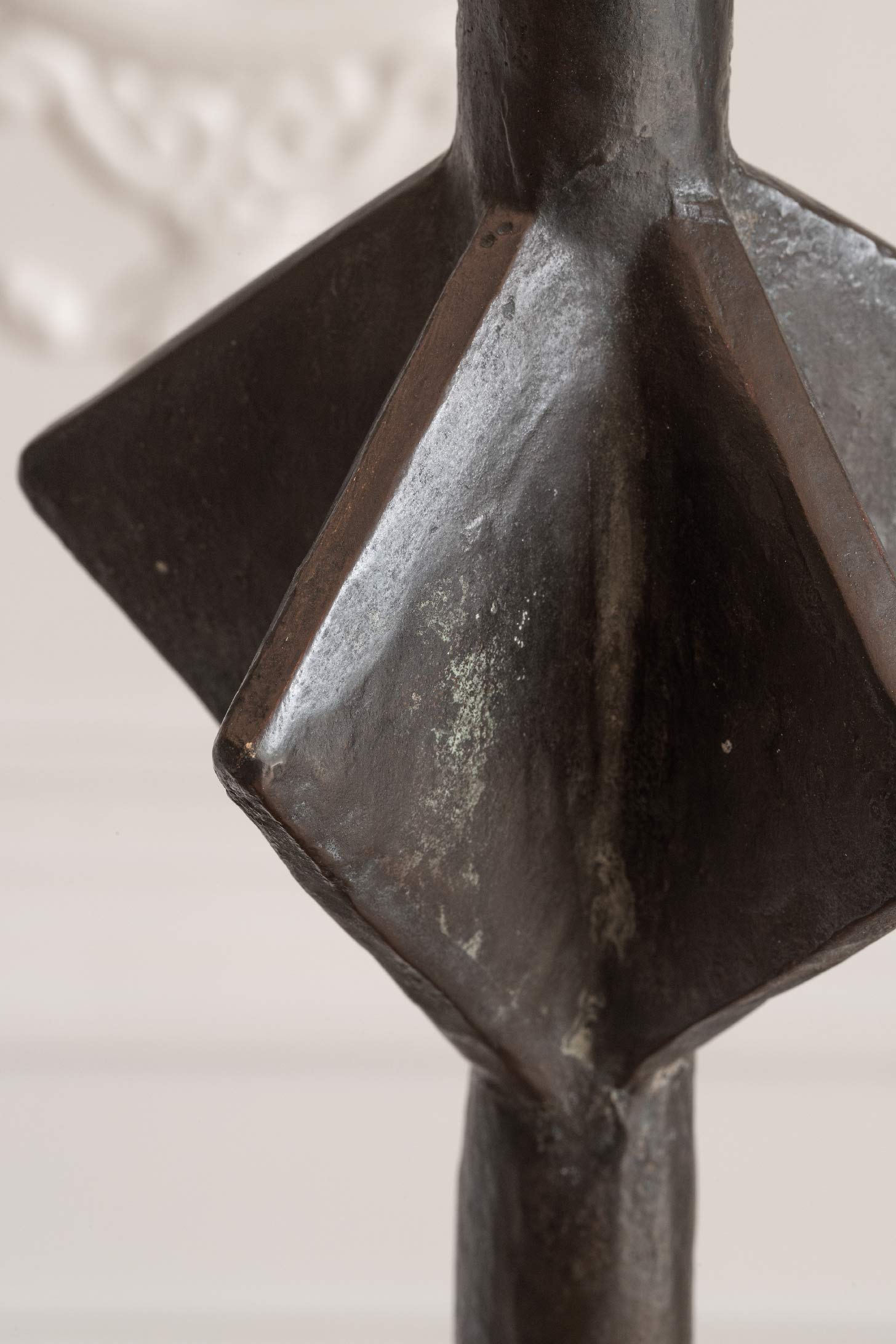
It was during this period that the Giacometti brothers met Jean-Michel Frank at the Tuileries Fair. The interior designer subsequently called upon the talents of the two brothers on a regular basis, and they designed mainly light fittings and accessories for him. This collaboration gave rise to pieces that were both striking and whimsical, at times surrealist and always highly modern. Intended for mass production or made to order, most of the objects were cast in plaster, with patinas ranging in colour from pure white to gold, via blue, yellow and black. Only the floor lamps were cast in bronze by the foundryman Alexis Rudier, their patinas also being meticulously crafted in shades of brown, gold and antique green… Emblematic of Frank’s aesthetic, these pieces were commissioned by the era’s most prominent collectors, including the Noailles, Pierre David-Weill, Elsa Schiaparelli, Guerlain, the Rockefellers and Jorge Born… Having remained in Switzerland during the war, Alberto joined Diego in Paris in 1945, where he found his studio intact. They resumed their work side by side and soon received new commissions.
Following Jean-Michel Frank’s death in 1941, Alberto and Diego retrieved their plaster casts and models. It was the Maeghts who, to decorate their flat on Avenue Foch, asked the Giacomettis to produce a new edition of their bronze floor lamps, which had become classics. The art dealer Pierre Matisse followed suit and regularly exhibited a few examples in his gallery in New York in 1934, whilst Jacques Adnet decided to sell them at his Galerie des Arts Français in Paris in the 1950s. The success of these incredible sculptural lamps continued unabated after the war. Quite the contrary! The greatest collectors, aesthetes and interior designers were constantly seeking to surround themselves with these pieces. From 1962 onwards, Diego had the floor lamps cast by Susse frères under his supervision. Alberto died in 1966.
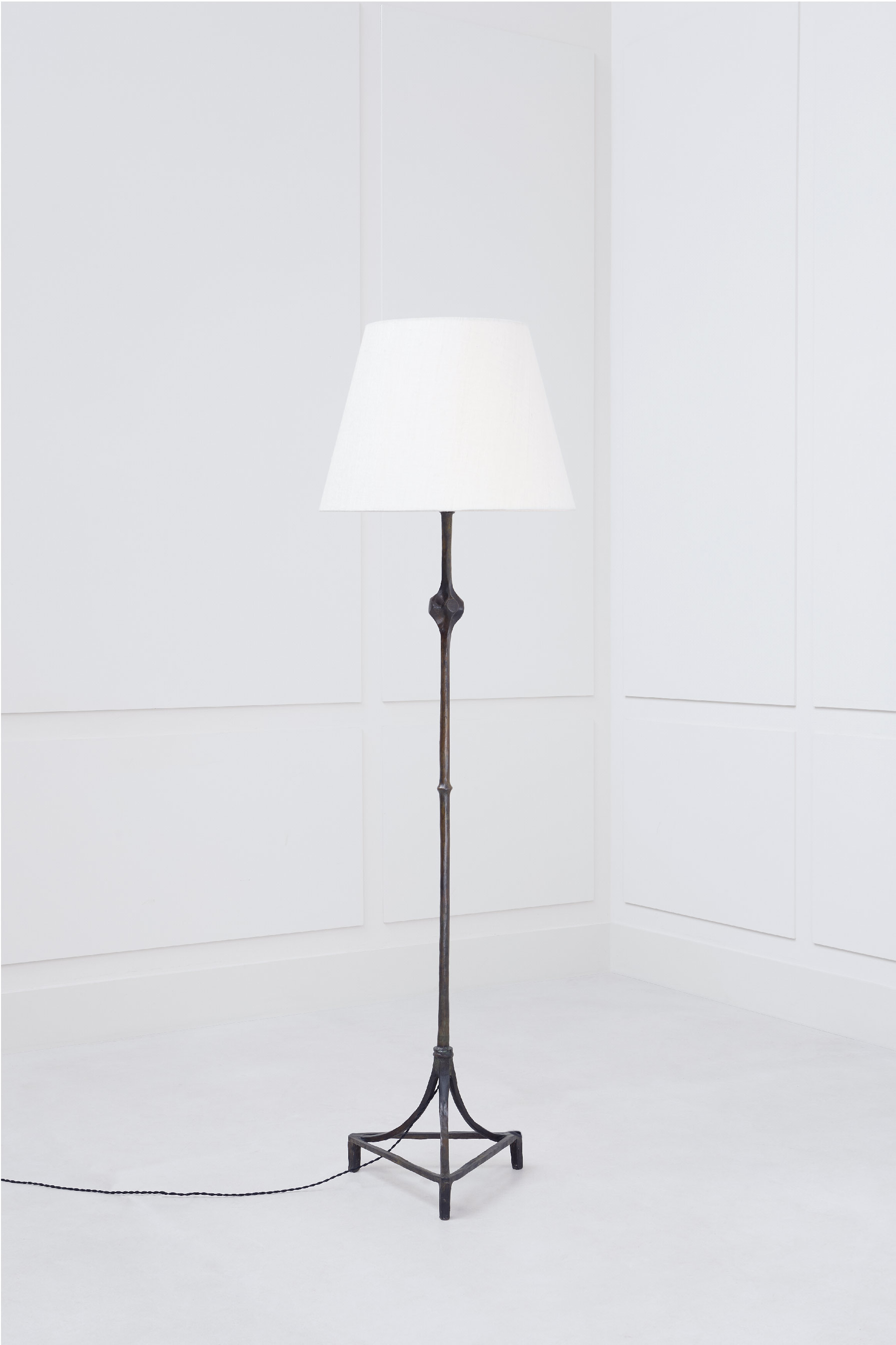
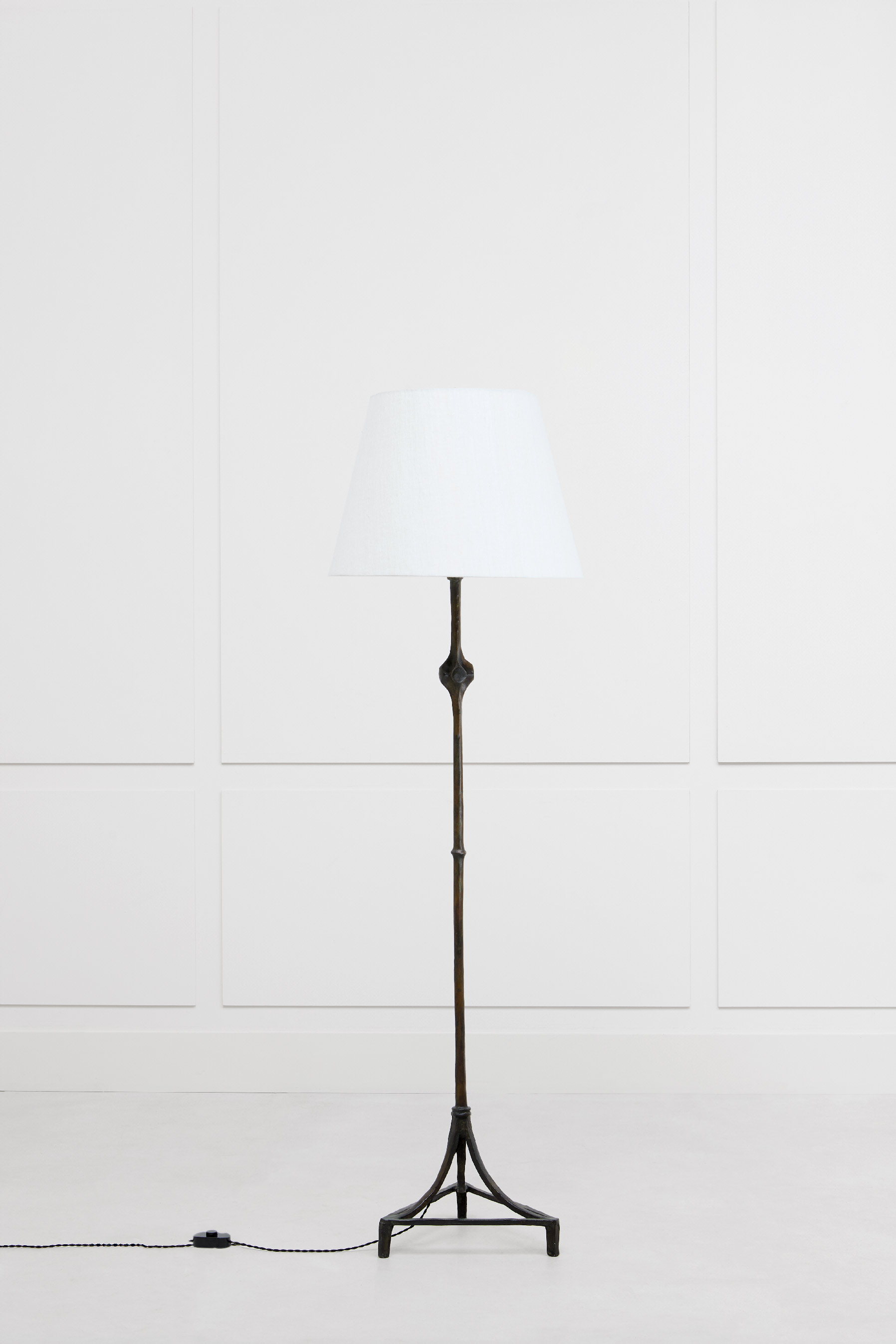
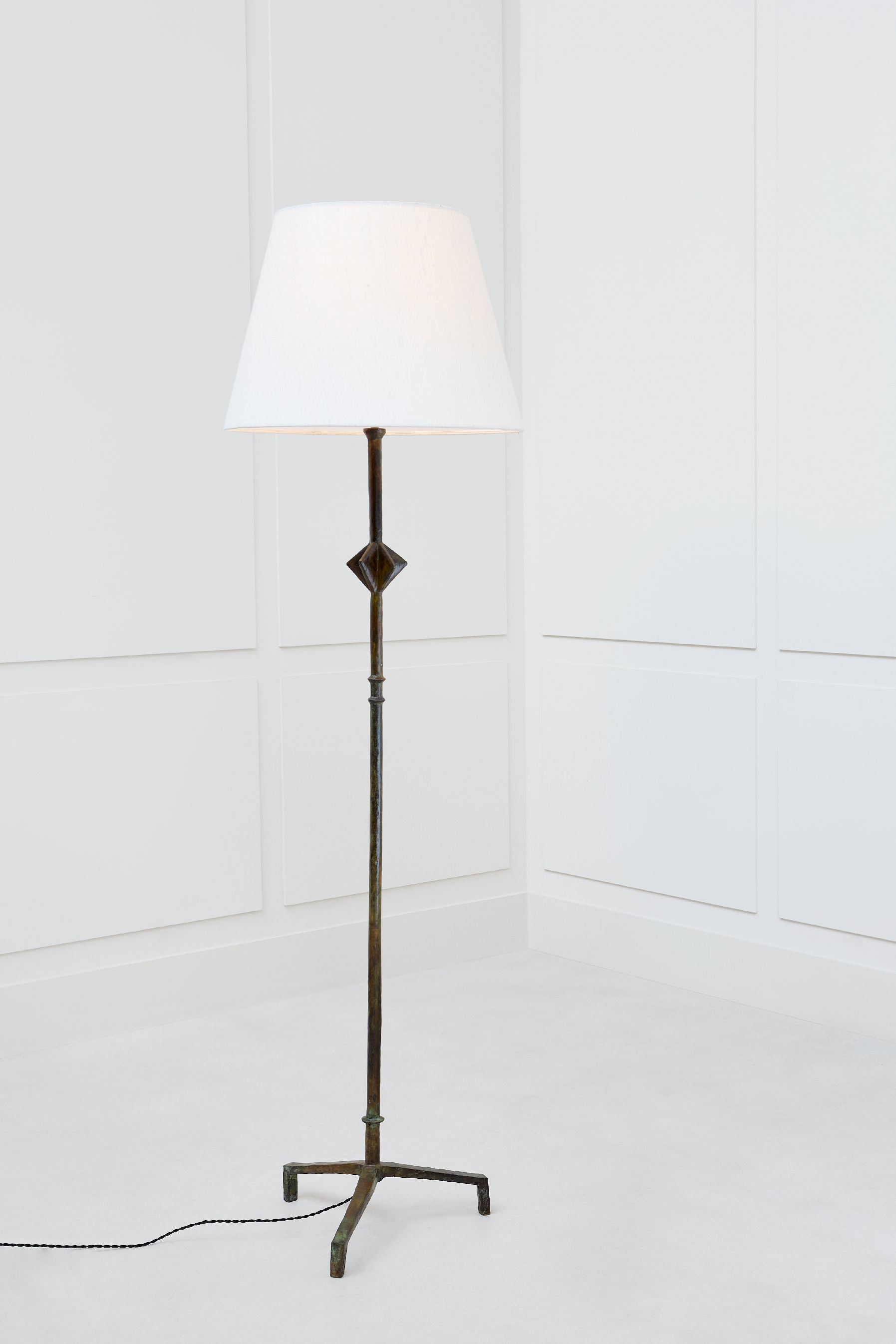
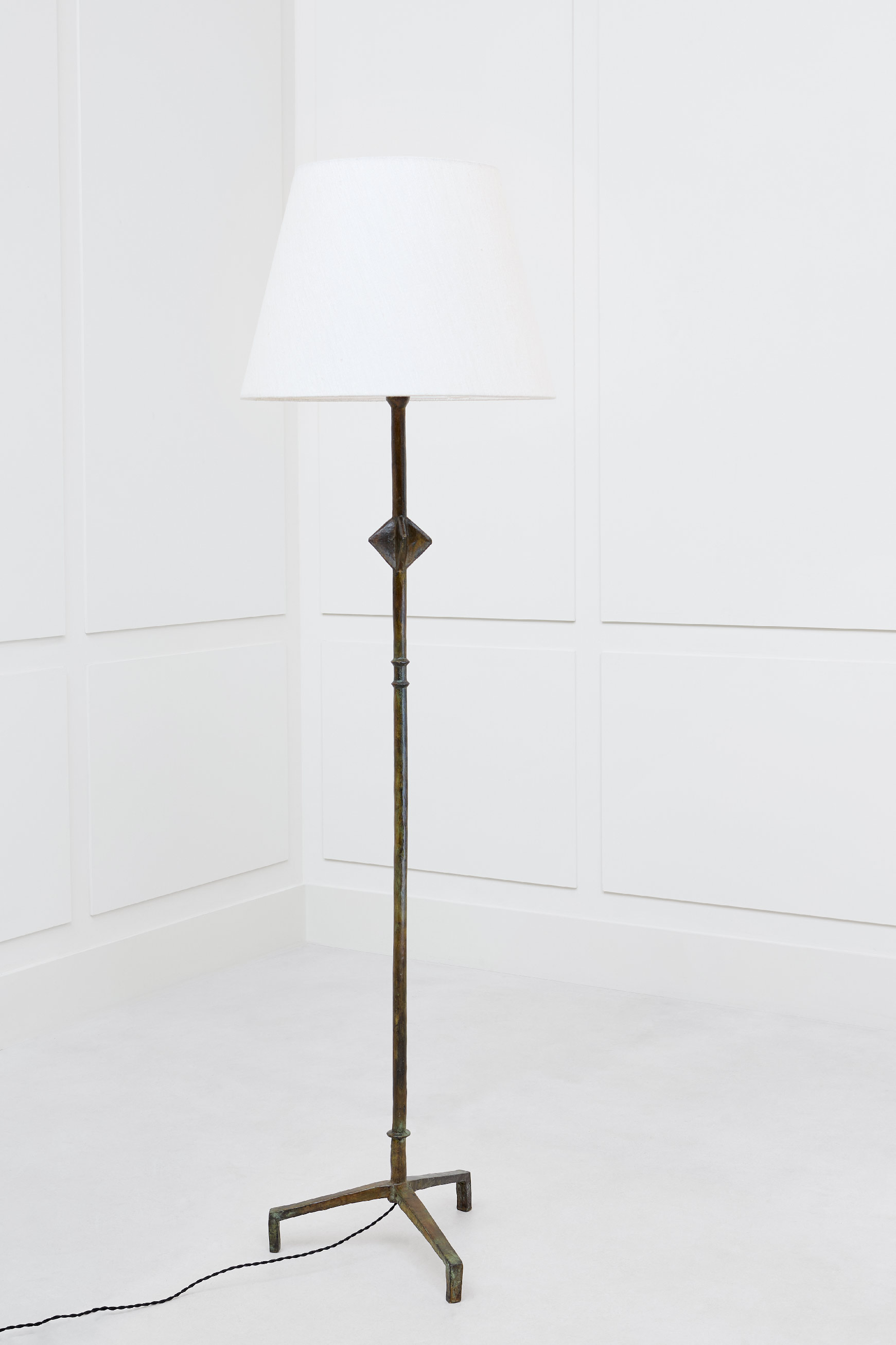
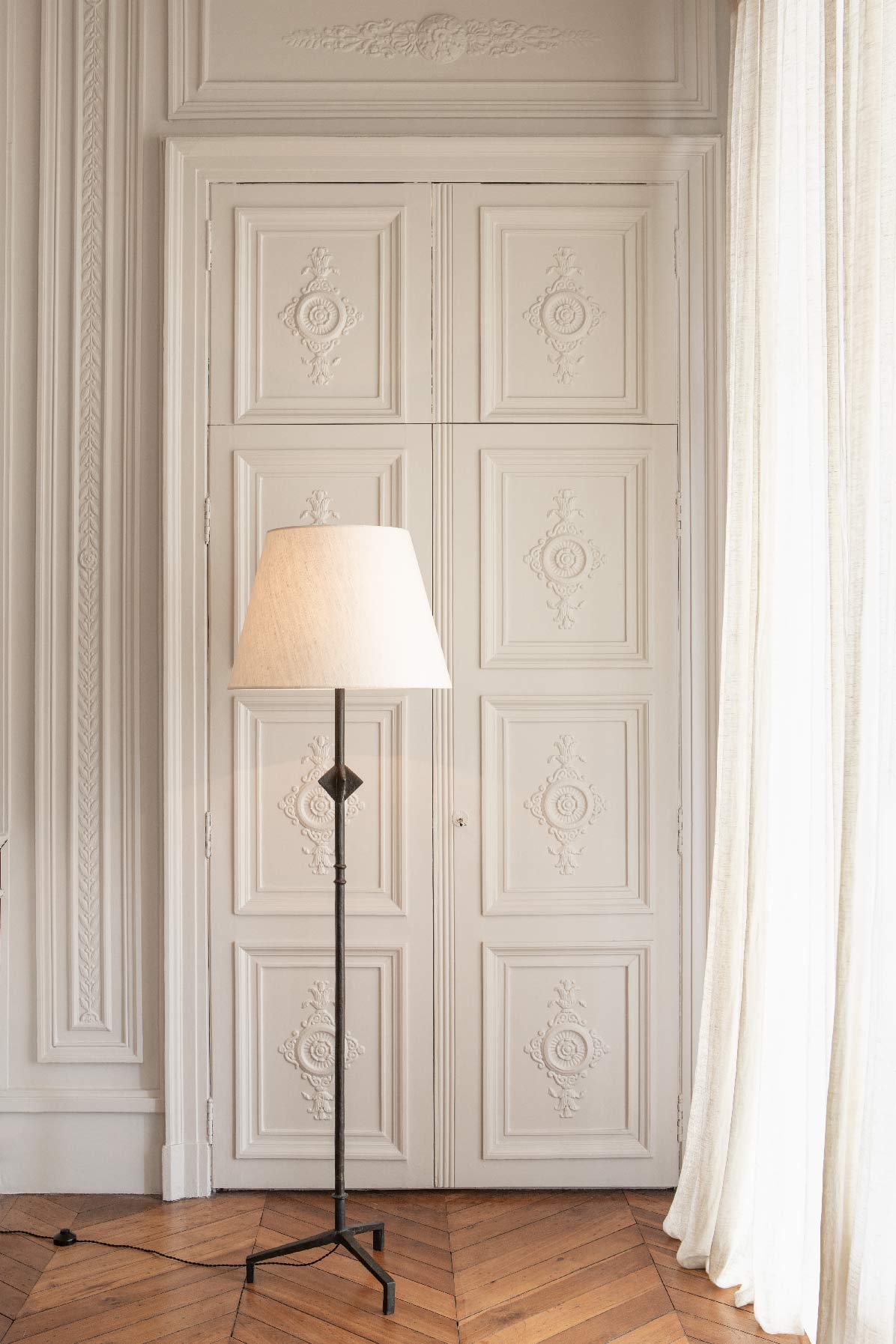
Exactly fifty years after the sculptor’s death, his works continue to make a strong impression and remain highly sought-after by major collectors. The ‘Figure’ floor lamp that we are presenting here is one of Jean-Michel Frank’s iconic creations. Even today, this piece retains its perfect elegance and striking modernity.
Today, Alberto Giacometti’s works form part of the permanent collections of the world’s most prestigious museums, such as the MoMA in San Francisco and New York, the Metropolitan Museum of Art and the Guggenheim Museum in New York, the Centre Pompidou and the Musée des Arts Décoratifs in Paris, and the Tate Modern in London, amongst many others. They are also part of the permanent collections of major art foundations such as the Maeght Foundation in Saint-Paul-de-Vence, France; the Beyeler Foundation in Basel, Switzerland; and the Frederick R. Weisman Art Foundation in Los Angeles. Since the 1930s, the value of this artist’s work, whether his sculptures or the pieces he created for Jean-Michel Frank, has continued to rise, particularly this year to mark the fiftieth anniversary of his death, when pieces of the same model as ours have fetched record prices.